Why Choose a Small Gear Motor for Global Applications?
A Small Gear Motor can solve demanding motion problems where space, energy, and control matter. Its compact housing fits behind panels, beneath conveyors, and inside automated equipment. The gearbox increases output torque while reducing speed, creating steady movement for precise mechanisms. This balance helps engineers design smaller products without sacrificing practical performance.
Global applications require more than a convenient size. Engineers must match voltage, frequency, torque, duty cycle, noise limits, and mounting dimensions. A motor designed for one market may fail elsewhere because of different power systems or operating conditions. Reliable suppliers provide drawings, test data, material details, and traceable quality records. They should also support appropriate regional certifications and documented safety requirements.
Field experience shows that small motors often face harsh realities. Dust enters. Temperatures change. Loads become heavier than expected. A carefully selected Small Gear Motor can improve efficiency in medical devices, packaging machines, agricultural controls, and smart home equipment. Still, compact does not mean universally suitable. That assumption can fail.
Selection should begin with measured load requirements, not appearance. Engineers should test starting torque, continuous operation, heat buildup, vibration, and service life. A prototype may run quietly on a workbench, then struggle after weeks of repeated cycling. That result deserves attention, not excuses. Suppliers and designers should review the failure honestly, adjust the gear ratio, and confirm performance under realistic conditions. With disciplined testing and transparent documentation, a Small Gear Motor becomes more than a component. It becomes a dependable part of a global product strategy.
What Is a Small Gear Motor and How Does It Work?
Why Choose a Small Gear Motor for Global Applications?
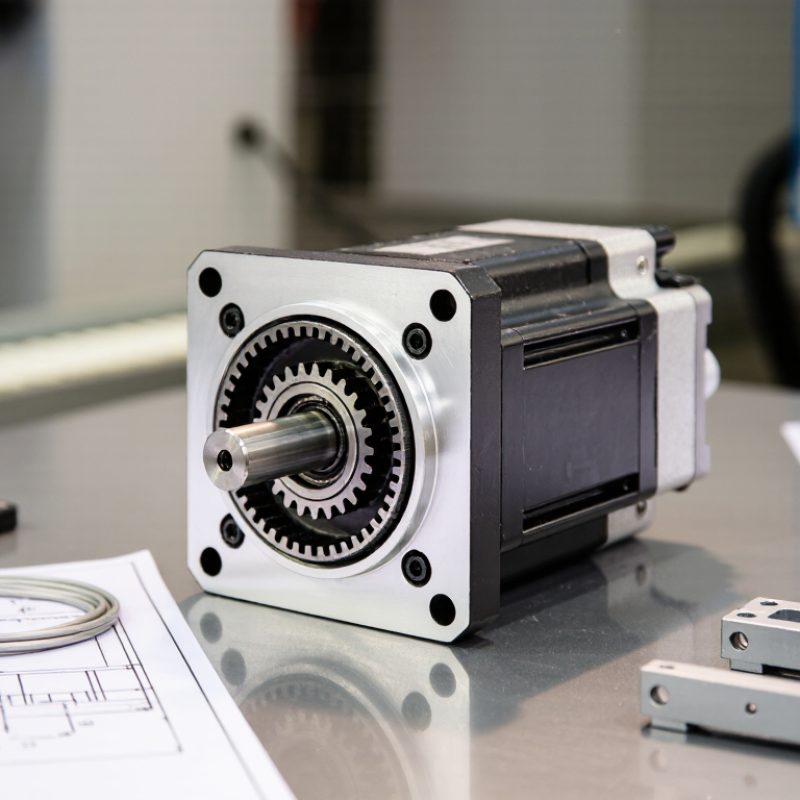
A small gear motor combines an electric motor with a gear train. The motor creates rotational force, while the gears reduce speed and increase torque. This makes controlled movement possible in compact equipment. You may find one inside dispensers, medical devices, shutters, valves, and laboratory instruments. Its small housing saves space without removing useful mechanical strength.
Inside the unit, electrical energy turns the motor shaft. The shaft drives several gears with different sizes. Smaller gears spin faster, while larger gears deliver stronger output. The final shaft moves more slowly and steadily. This balance helps equipment handle repeated cycles, such as opening a vent every few minutes. However, compact does not mean effortless. Heat, dust, voltage differences, and poor alignment can shorten service life. I have seen designs fail because engineers measured torque but ignored starting load. That mistake is easy to repeat.
Tips: Check rated voltage, output speed, torque, duty cycle, noise, and mounting dimensions. Test the motor under real load, not only on a workbench. Confirm insulation and safety requirements for each target market. Leave room for ventilation. A smaller motor may fit beautifully, yet still need stronger gears.
Why Choose a Small Gear Motor for Global Applications? - What Is a Small Gear Motor and How Does It Work?
A small gear motor combines an electric motor with a reduction gearbox to convert speed into usable torque. The figures below represent common engineering ranges and selection considerations; exact performance depends on motor size, gear ratio, load profile, duty cycle, and operating environment.
| Dimension | Typical Data | How It Supports Global Applications |
|---|---|---|
| Definition | Compact electric motor with an integrated speed-reduction gearbox | The motor supplies rotational energy while the gearbox reduces output speed and increases available torque for compact equipment and automated mechanisms. |
| Operating principle | Electrical energy → motor rotation → gear reduction → controlled output torque | A higher-speed motor can be paired with a suitable gear ratio to deliver the lower speed and higher torque required by an actuator, conveyor, valve, pump, or positioning mechanism. |
| Common motor types | Brushed DC, brushless DC, AC induction, and stepper motor configurations | Different motor types support different regional power systems, control architectures, maintenance requirements, noise targets, and motion-control needs. |
| Typical power range | Approximately 1 W to 750 W for many compact gear-motor applications | This range covers low-power consumer devices, instruments, and small automation systems through to moderate-duty machinery. The appropriate rating must be selected from the actual load and duty cycle. |
| Typical output speed | Approximately 1 to 1,000 rpm, depending on motor speed and gear ratio | Reduction gearing allows the same basic motor concept to serve slow, controlled movements as well as faster material-handling or airflow applications. |
| Typical continuous output torque | Approximately 0.01 to 50 N·m across common small gear-motor sizes | Gear reduction increases torque at the output shaft, helping compact equipment move loads without requiring a physically large motor. Peak and stall torque must be evaluated separately. |
| Gear ratios | Commonly about 3:1 to 1,000:1, with multiple reduction stages used for higher ratios | A broad ratio range makes it possible to match output speed and torque to different machines while using standardized motor platforms. |
| Mechanical efficiency | Often approximately 50% to 95%, depending on gear type, ratio, lubrication, load, and speed | Efficiency affects energy consumption, heat generation, battery runtime, and allowable continuous load. Worm gears and high-ratio systems may have lower efficiency than spur or planetary designs. |
| Common gearbox designs | Spur, planetary, helical, worm, and bevel gearboxes | Spur gears offer economical speed reduction; planetary gears provide high torque density; worm gears provide high reduction in a compact layout; helical and bevel gears support smoother or angled transmission. |
| Available supply voltages | DC versions commonly use 3, 6, 12, 24, or 48 V; AC versions may use regional single-phase or three-phase supplies | Selecting the correct voltage version helps equipment integrate with local mains systems, batteries, industrial power supplies, and existing control panels. Voltage and frequency must be confirmed before deployment. |
| Speed control | PWM control for many DC motors; variable-frequency drives for compatible AC motors; dedicated drives for brushless and stepper motors | Common control methods simplify integration with internationally available controllers, programmable logic controllers, embedded systems, and battery-powered equipment. |
| Feedback options | No feedback, Hall sensors, encoders, tachometers, or limit-switch interfaces | Feedback improves speed regulation, position accuracy, fault detection, and repeatability in globally distributed automation and medical, laboratory, or service equipment. |
| Ingress protection | Common ratings include IP20 to IP54; higher ratings are available with suitable sealing and construction | The required IP rating depends on dust, moisture, washdown, and outdoor exposure. An IP rating describes protection against solids and water ingress, not corrosion resistance or chemical compatibility. |
| Operating temperature | Many standard designs operate near −20°C to +60°C, subject to derating and lubricant limits | Temperature capability supports use across different climates, but cold-start torque, insulation class, lubricant viscosity, condensation, and heat dissipation must be checked for the target location. |
| Duty cycle | Intermittent, periodic, or continuous duty; continuous operation requires thermal verification | A motor that works for short cycles may overheat under continuous operation. Duty-cycle data helps ensure reliable performance in equipment used under different regional operating schedules. |
| Size and weight advantage | Compact coaxial, parallel-shaft, or right-angle arrangements; many units weigh from tens of grams to several kilograms | Small dimensions reduce machine footprint, shipping volume, installation space, and structural load, which is valuable for portable, modular, and distributed equipment. |
| Noise and vibration | Influenced by gear tooth profile, bearing quality, speed, lubrication, alignment, and mounting stiffness | Low-noise designs are important in office equipment, healthcare devices, laboratory instruments, and residential products. Acoustic performance should be measured under the intended load and speed. |
| Typical applications | Conveyors, dosing systems, automatic doors, smart appliances, pumps, fans, valves, robotics, medical equipment, and packaging machinery | The combination of compact size, controllable speed, and increased torque enables standardized motion solutions across many industries and regional markets. |
| Global compliance considerations | Verify applicable electrical, electromagnetic-compatibility, machinery-safety, environmental, and efficiency requirements for the destination market | Regulatory requirements vary by country and application. Documentation, electrical ratings, insulation, grounding, EMC behavior, and required markings should be reviewed before product approval or shipment. |
| Selection checklist | Load torque, starting torque, output speed, duty cycle, voltage, environment, mounting, shaft arrangement, feedback, and service life | Evaluating these parameters together reduces the risk of overheating, insufficient starting performance, premature gear wear, incompatible controls, and failures caused by local environmental conditions. |
FAQS
Compact housings fit conveyors, valves, medical devices, and automated machines. High reduction ratios provide steady torque at controlled speeds. Space stays limited.
Start with load torque, output speed, starting force, and duty cycle. A conveyor carrying 8 kilograms may need much higher starting torque. Catalog headlines can mislead.
Starting force can greatly exceed running force. An undersized gearbox may fail during acceleration or repeated starts. This detail is easy to underestimate.
Confirm voltage range, frequency, connector type, and regional electrical requirements. Ask qualified professionals to verify local installation rules. Do not assume compatibility.
Small housings release heat poorly, especially inside sealed cabinets. Check ambient temperature and duty cycle. Test beside hot equipment, not only on a clean bench.
Choose an enclosure protection level suitable for dust and moisture. Farms, workshops, and coastal facilities may need stronger protection. Conditions vary.
Record shaft load, mounting position, reflected inertia, backlash, noise, shock loads, and maintenance access. Leave room for inspection. Compact designs can be awkward.
International electrical, machinery safety, electromagnetic, and material rules may apply. Regional certification and inspection procedures can differ. Documentation reduces errors across languages and time zones.
Yes. Efficient gearing reduces energy waste and heat. Motor-driven systems consume substantial electricity worldwide. I would still question efficiency claims without load testing.
Yes. Cold storage, hot cabinets, dust, reversals, and continuous operation can expose weaknesses. Laboratory results are useful, but incomplete. Real loads matter.
Conclusion
A Small Gear Motor is a compact motor-and-gearbox system that converts electrical energy into controlled mechanical movement. By reducing speed and increasing torque, it can drive equipment that requires steady, precise, and efficient operation while fitting into limited spaces. Its compact design, flexible voltage options, reliable performance, low energy consumption, and adaptability to different control systems make it suitable for global applications, including automation, medical devices, smart equipment, household products, and light industrial machinery.
Choosing the right Small Gear Motor requires evaluating torque, speed, load type, duty cycle, noise, operating temperature, protection level, and available power supply. International deployment also requires attention to relevant electrical safety, electromagnetic compatibility, efficiency, and environmental standards, as well as regional certification requirements. Proper installation should include accurate alignment, secure mounting, suitable wiring, and protection from excessive loads or moisture. Regular inspection, lubrication when applicable, and performance testing can extend service life, while adaptable connectors, control settings, and enclosure designs help the motor operate reliably in different countries and environments.
