Top 10 Variable Speed Motor Manufacturers Worldwide

Time:2026-09-27 Author:Henry
0%

Choosing a Variable Speed Motor manufacturer requires more than comparing catalog prices or power ratings. Buyers must examine efficiency, torque control, thermal performance, service coverage, and long-term reliability. These factors influence conveyor lines, pumps, fans, compressors, machine tools, and many other industrial systems.

This guide reviews ten leading manufacturers worldwide, using practical criteria such as product range, engineering experience, documented performance, customization capability, and after-sales support. Technical certifications, testing practices, warranty terms, and distributor networks also matter. A motor that performs well in a laboratory may struggle in a dusty factory or under frequent start-stop cycles. Real operating conditions tell a different story.

The ranking is not absolute. Regional availability, application requirements, and project budgets can change the best choice. Some manufacturers lead in heavy-duty industrial drives, while others offer stronger solutions for compact automation equipment. That distinction deserves attention. Specifications may also vary between product series, and published efficiency figures do not always reflect installation conditions. Readers should verify current data with manufacturers and qualified engineers before making a purchase. This article aims to provide a reliable starting point, not a final engineering decision. Mistakes are possible, especially when product updates and regional service changes occur. Careful comparison remains essential.
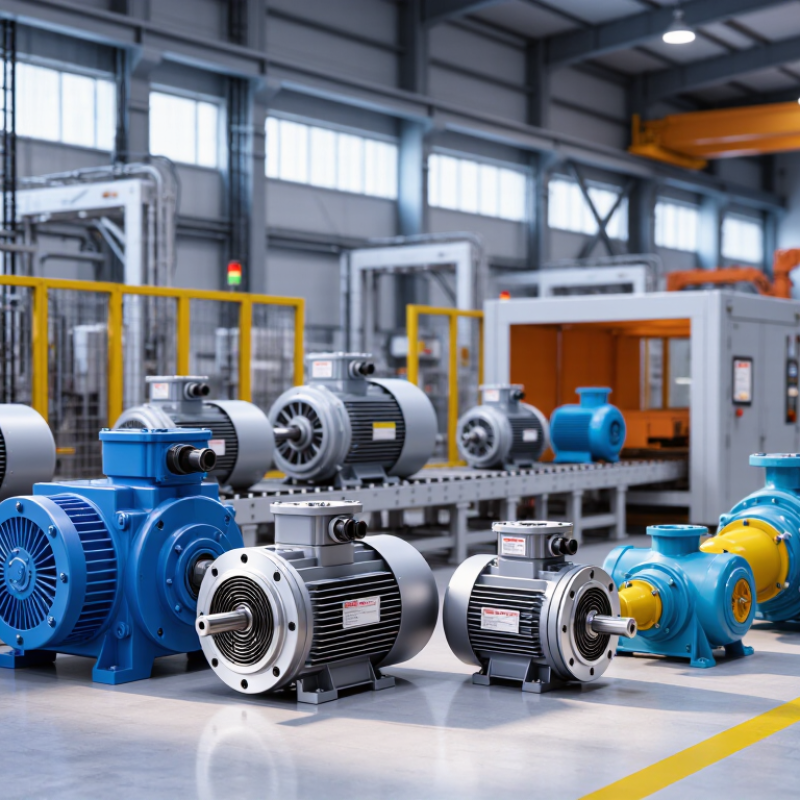
Top 10 Variable Speed Motor Manufacturers Worldwide

Variable Speed Motors: Definition, Functions, and Industrial Applications

Variable Speed Motors: Definition, Functions, and Industrial Applications

A variable speed motor is a motor whose rotational speed can be adjusted to match a machine’s needs. In many installations, an electronic drive varies the power frequency supplied to the motor. This lets operators control flow, pressure, or line speed instead of relying only on valves or mechanical brakes. A pump slowing to meet lower demand is a practical example. Less wasted motion.

The International Energy Agency’s 2011 report, Energy-Efficiency Policy Opportunities for Electric Motor-Driven Systems, estimates that motor-driven systems use about 46% of global electricity. That figure covers many motor applications, not variable speed motors alone. Still, it shows why control choices matter. Variable speed systems are common in pumps, fans, compressors, mixers, and conveyors, where demand changes during a shift. Potential savings depend on the equipment, operating hours, and load profile; installing a drive does not guarantee lower energy use. This is often where expectations need a reality check.

Tips: Check the motor’s load pattern before selecting a drive. Record operating hours and speed changes, then confirm that the motor, drive, and protection settings suit the application. A poorly matched system can add cost without delivering the expected benefit.

Key Criteria for Evaluating Global Variable Speed Motor Manufacturers

When comparing global variable speed motor manufacturers, start with measured performance, not catalogue claims. The International Energy Agency’s 2011 assessment estimated that electric motor-driven systems use 43–46% of global electricity. That figure makes efficiency under real operating conditions a serious selection criterion. Ask for test results across typical speed and load ranges, not just peak-efficiency numbers. A motor may run for hours at partial load. That matters.

Check whether performance data follows recognized methods. IEC 60034-30-1 defines efficiency classes for many motor types, while IEC 61800-9-2 addresses efficiency indicators for power drive systems. Together, these standards help buyers compare motors and drives more consistently. Also review thermal limits, insulation, bearing design, vibration, and protection ratings against the actual duty cycle. A dusty pump room and a clean indoor production line need different safeguards. Request service-life assumptions, spare-parts availability, and response times in writing. Test support matters.

Manufacturing scale alone is a weak proxy for reliability. Examine factory quality controls, traceability, and independent test evidence. Ask how the supplier handles repeated starts, low-speed cooling, and harmonic effects when a drive is paired with a motor. These details can expose costly gaps. Datasheets can still flatter. Compare warranty exclusions carefully, and verify that quoted efficiency covers the complete motor-drive system where relevant. Some published data may not match your site conditions; a witnessed acceptance test is stronger evidence.

Key Criteria for Evaluating Global Variable Speed Motor Manufacturers

The chart shows a proposed 100-point buyer evaluation framework, not measured ratings of manufacturers. Consider motor efficiency, converter operating range, reliability, applicable standards, service, and lifecycle cost alongside product and support capabilities.

Top 10 Variable Speed Motor Manufacturers Worldwide

A worldwide look at the top ten variable speed motor manufacturers should compare engineering capability, product range, and support—not just sales figures. These manufacturers typically serve factories, water systems, material handling, and building services. Their motors must match the load, operating speed, and available power supply. A pump running steadily at reduced speed has different needs from a conveyor that starts and stops throughout a shift. Small details matter. Ask about insulation class, enclosure protection, cooling method, and compatibility with the selected drive. Clear test data and installation guidance also help buyers assess quality.

Global reach can be useful, but local service matters when a motor needs inspection or replacement. Compare lead times, spare-parts access, repair options, and technical support in the region where equipment will operate. Check efficiency across the expected speed range, rather than relying on a single rated-point figure. That takes more effort. One imperfect part of any top-ten comparison is that public data rarely uses identical criteria; rankings can therefore conceal meaningful differences. Buyers should verify performance claims against application conditions, including ambient temperature, duty cycle, vibration, and load variation. A careful specification review may reveal that a less prominent supplier fits the job better.

Technology, Efficiency, and Product Comparison Among Leading Manufacturers

Variable-speed motor makers differ less by headline efficiency than by how well motor, drive, and application work together. The IEA’s 2011 report, Energy-Efficiency Policy Opportunities for Electric Motor-Driven Systems, estimates these systems consume 43–46% of global electricity. That scale makes part-load performance important, especially in pumps and fans that rarely run at full speed.

Compare documented efficiency classes, operating ranges, drive compatibility, and thermal limits—not just nominal ratings. A well-matched drive can reduce speed when demand falls, but savings depend on the load profile and installation. Small details matter. Check enclosure protection, cooling method, bearing arrangements, and access to service data. The U.S. Department of Energy’s Improving Motor and Drive System Performance sourcebook also stresses evaluating the complete system, rather than judging a motor in isolation.

For a fair product comparison, request efficiency curves, tested operating points, and clear commissioning guidance. Ask how the manufacturer addresses harmonics, overloads, and low-speed cooling. These details affect reliability on a real plant floor, where dust, heat, and changing loads are ordinary. A catalog rating can still mislead. I would also question comparisons that omit test conditions; without them, impressive figures may not describe the same duty.

Selection Factors for Different Industrial and Commercial Requirements

Choosing a variable speed motor manufacturer starts with the actual load, not a catalog’s highest efficiency figure. Record the required speed range, starting torque, operating hours, and expected load changes. A conveyor carrying uneven packages needs different control behavior from a fan running at steady speed. Check that the motor and drive are designed to work together; a mismatch can cause heat, noise, or unstable operation.

Then examine how the manufacturer verifies performance. Ask for test data at relevant speeds, not only at rated conditions. For a dusty workshop or a washdown area, confirm enclosure protection, insulation, and cooling details. Also review spare-part availability, repair support, and response times in your region. These details matter. A low purchase price can look attractive, yet long waits for a replacement may cost more than the initial savings.

Commercial buildings often prioritize quiet operation, energy use, and straightforward maintenance for pumps or ventilation systems. Industrial sites may need stronger overload capacity, precise speed control, and reliable performance across long shifts. Compare warranty terms and request references from similar applications, while checking what the warranty excludes. One point is easy to overlook: projected savings depend on real operating hours and local energy costs. Estimates can be optimistic. Revisit them using measured site data before choosing a supplier.

Top 10 Variable Speed Motor Manufacturers Worldwide - Selection Factors for Different Industrial and Commercial Requirements
No. Selection Factor Motor and Drive Configuration Suitable Requirements What to Verify Practical Trade-off
1 Application and load profile Variable-speed AC motor paired with a compatible variable-frequency drive (VFD) Pumps, fans, conveyors, mixers, and other loads that need adjustable speed Required speed range, starting torque, load inertia, operating hours, and duty cycle A correctly sized system can control speed to match demand; frequent operation outside the motor’s rated conditions needs careful review.
2 Power and supply compatibility Motor and drive rated for the site’s available single-phase or three-phase supply Industrial plants, commercial buildings, and facilities with different supply voltages Input voltage and frequency, phase, motor rated current, drive output rating, and local electrical requirements Supply compatibility must be confirmed for the complete motor-drive system, not inferred from motor power alone.
3 Speed range and control accuracy Induction or synchronous motor controlled by a VFD; encoder feedback where needed Processes requiring stable speed, controlled acceleration, or repeatable positioning-related motion Minimum and maximum speed, speed regulation, feedback method, and performance at low speed Open-loop control is simpler; closed-loop feedback can improve speed regulation but adds components and commissioning work.
4 Torque at low speed Inverter-duty motor and appropriately selected drive, with forced ventilation if required Extruders, conveyors, hoists, and other applications needing substantial torque at low speed Continuous and peak torque, overload duration, cooling method, and motor thermal limits A shaft-mounted fan may provide less cooling when the motor runs slowly; confirm thermal capability across the full speed range.
5 Energy efficiency and operating hours Efficient motor matched to the load, with variable-speed control where the process benefits from speed adjustment Long-running pumps, fans, and other applications with changing demand Motor efficiency class under applicable standards, load profile, drive losses, and expected annual operating hours Energy savings depend on the actual load and control strategy; a VFD does not guarantee savings in every application.
6 Environment and ingress protection Enclosure and cooling arrangement selected for the installation environment Dusty, wet, hot, corrosive, or washdown areas, depending on the specified equipment rating Required IP rating, ambient temperature, mounting orientation, corrosion exposure, and ventilation clearance Higher environmental protection can affect cooling and maintenance access; choose ratings based on site conditions.
7 Hazardous-area requirements Motor and associated equipment certified for the applicable hazardous-area classification Locations where flammable gases, vapors, or combustible dust may be present Area classification, gas or dust group, temperature class, certification, and permitted drive-motor combination Certification and installation requirements are jurisdiction-specific; ordinary industrial equipment is not a substitute for certified equipment.
8 Electrical insulation and cable effects Motor insulation system compatible with inverter supply; output filters or other mitigation where required Long motor-cable runs, fast-switching drives, or installations with demanding electrical conditions Drive switching characteristics, cable length and type, grounding, bearing-current risk, and manufacturer guidance VFD output waveforms can place additional electrical stress on motor insulation; system-level compatibility should be checked.
9 Controls and system integration Drive with control inputs and communication options compatible with the plant automation system Automated production lines, building systems, and remotely monitored equipment Required control signals, communication protocol, safety functions, I/O, and commissioning support Confirm interoperability and safety requirements across the motor, drive, controller, and machine before purchase.
10 Serviceability and lifecycle support Motor-drive package with documented maintenance requirements and accessible replacement parts Critical equipment where downtime, service response, or long-term availability matters Warranty terms, service coverage, spare-parts availability, documentation, training, and repair options Purchase price alone does not reflect lifecycle cost; assess maintenance, downtime, energy use, and support together.

Scope note: This table summarizes ten practical selection factors for comparing variable-speed motor suppliers. It is not a ranked list of companies, and no company or brand names are included. Final equipment selection should be checked against the application, applicable standards, and supplier documentation.

FAQS

What performance data should buyers request?

Ask for test results across typical speed and load ranges. Peak-efficiency figures alone may not reflect daily operation.

Why does the actual load matter?

A conveyor carrying uneven packages needs different control behavior from a fan running steadily. Record speed range, starting torque, and operating hours.

How can buyers check motor and drive compatibility?

Ask whether they are designed to work together. A mismatch can cause heat, noise, or unstable operation. Small details matter.

Which environmental details should be reviewed?

Check enclosure protection, insulation, and cooling for the site. A dusty pump room may need different safeguards from a clean production line.

What reliability evidence is useful?

Review factory quality controls, product traceability, and independent test results. Ask how the system handles repeated starts and low-speed cooling.

What support should a supplier provide?

Confirm spare-parts availability, repair options, and response times in your region. Get these details in writing, not just in a conversation.

How should buyers compare warranty terms?

Read exclusions carefully and ask about coverage for the complete motor-drive system. A long warranty can still leave important gaps.

Are projected energy savings dependable?

They depend on actual operating hours and local energy costs. Recheck estimates with measured site data; projections can be optimistic.

Do commercial and industrial sites need the same features?

Not always. Buildings may prioritize quiet pumps and easy maintenance, while industrial sites may need overload capacity for long shifts. I might still be overlooking a site-specific need.

Conclusion

This article explores the role of the Variable Speed Motor in modern industry, explaining how adjustable motor speed helps control equipment performance, improve process precision, and adapt power use to changing operating demands. It outlines common applications across manufacturing, building services, material handling, and other commercial settings, where dependable speed control can support smoother operation and more efficient energy use.

The guide also presents key criteria for evaluating manufacturers, including product range, technical capability, efficiency, reliability, support, and suitability for specific operating conditions. It compares broad technology and product considerations without focusing on individual brands, then explains how businesses can match motor characteristics to factors such as load profile, required speed range, installation environment, system compatibility, and maintenance needs. Together, these topics provide a practical framework for assessing global suppliers and selecting an appropriate solution for different industrial and commercial requirements.

Henry

Henry

Henry is a dedicated marketing professional with a profound expertise in the company's offerings. With years of experience in the industry, he possesses an impressive understanding of the market dynamics and consumer behaviors that drive success. Henry is committed to sharing his insights through......