Choosing a High Torque Gear Motor is not simply a matter of selecting the largest torque rating. Global buyers must examine load cycles, gearbox efficiency, mounting space, speed control, and environmental conditions.
Darle W. Dudley, widely regarded as a pioneer of gear engineering, emphasized, “A gear is not designed in isolation.” This principle remains valuable when comparing planetary, helical, worm, bevel, cycloidal, and spur gear motors. Each design behaves differently under shock loads, continuous operation, and frequent reversing.
Small details matter.
A conveyor carrying wet aggregate may need sealed housing, low-speed stability, and strong thermal performance. A robotic actuator may prioritize compact size, backlash control, and repeatable positioning. A packaging machine may require quiet operation and rapid acceleration. These applications cannot be judged by torque alone.
This guide examines the top 10 types of High Torque Gear Motor systems available to international buyers. It considers torque density, service life, efficiency, noise, maintenance, customization, and supply reliability. The ranking is practical, not absolute. A worm gear motor may suit a budget-driven lifting system, while a planetary unit could deliver better efficiency and durability.
Some specifications look impressive on paper. They may disappoint in real factories. Incorrect duty classification, poor lubrication, or undersized bearings can shorten service life dramatically. Buyers should verify tested performance, not rely only on catalog claims.
The discussion also recognizes an uncomfortable truth: the cheapest motor may become the most expensive choice. A careful comparison can reduce downtime, protect production schedules, and improve long-term operating confidence.
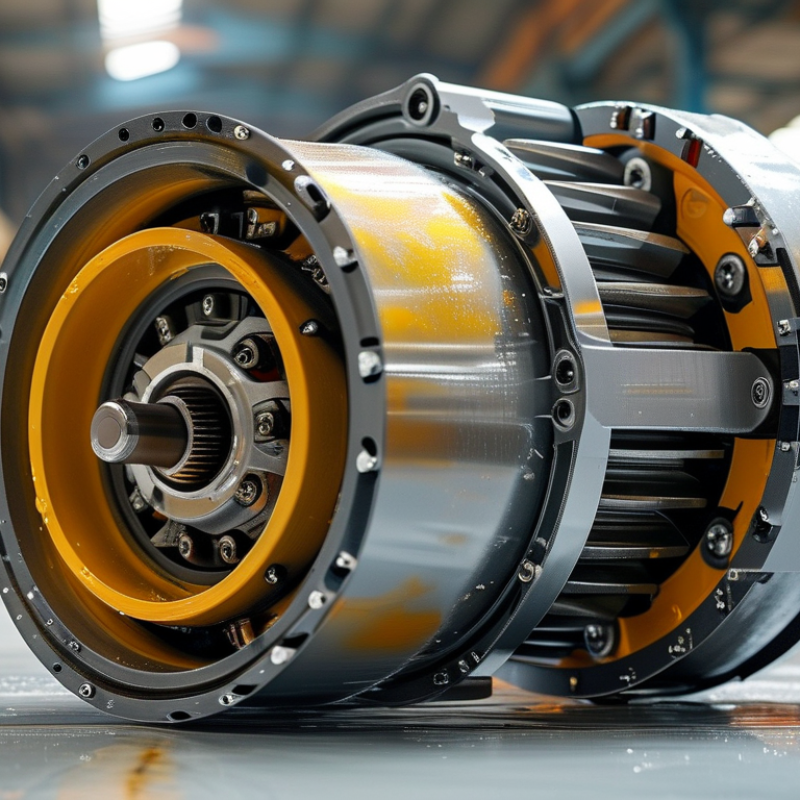
High-torque gear motors convert electrical power into controlled rotary force. Their performance depends on torque, gear ratio, speed, and operating duty. Worm, planetary, helical, bevel, and parallel-shaft designs suit different loads. A higher gear ratio usually increases output torque but reduces speed. It may also reduce efficiency. The motor’s rated torque should exceed the machine’s working demand, including starting resistance and sudden load changes. For a practical estimate, output torque can be checked with power, speed, and gearbox efficiency.
Speed selection needs equal care. A conveyor may require slow, steady rotation, while a mixer may need stronger starting torque. Gear ratio helps match motor speed with application speed. However, excessive reduction can create heat, backlash, or unnecessary energy loss.
S1 duty means continuous operation at a constant load until thermal stability is reached. This rating matters for fans, conveyors, pumps, and other equipment running for long periods. Real installations are rarely perfect.
Tips: Check the actual load profile, not only the average load. Measure startup torque when possible. Leave a reasonable service margin, but avoid extreme oversizing. Confirm ambient temperature, mounting position, lubrication, shaft direction, and brake requirements. A motor rated for S1 duty may still need cooling improvements in a hot enclosure. Small details matter.
High-torque gear motors serve different loads, speeds, and installation limits.
Spur gear motors use straight teeth for simple, affordable power transmission. They suit conveyors, feeders, and light industrial equipment. However, tooth contact can create noticeable noise at higher speeds.
Helical gear motors engage gradually, producing smoother motion and better load handling. They work well in mixers, packaging lines, and continuous-duty machines.
Bevel gear motors transfer torque through a right-angle layout. This design saves space when the motor must turn around a corner.
Worm gear motors provide high reduction ratios and strong holding ability. They are useful for lifts, gates, and positioning systems, but efficiency may fall under heavy reduction. Heat can build quickly.
Planetary gear motors combine several gears around a central sun gear. Their compact structure delivers high torque density and good load distribution. They often fit robotics, medical equipment, and automated production systems.
Selection should consider output torque, duty cycle, backlash, lubrication, mounting position, and ambient temperature.
In field installations, voltage mismatches and poor cooling cause many avoidable failures. I have also seen buyers choose maximum torque while ignoring starting current. That decision can overload the controller.
Noise matters. So does service access.
Gear calculations should be checked against real shock loads, not only catalog values. A cautious engineer may select a slightly larger motor, but oversizing can waste energy and reduce control quality.
Cycloidal gear motors suit conveyors, mixers, and indexing tables exposed to shock loads. Their rolling elements distribute contact forces across several teeth. This design can deliver high reduction ratios with strong impact resistance. However, buyers should inspect backlash growth, lubricant temperature, and seal performance after repeated reversing cycles. Field experience matters here. Catalog torque is not enough.
Harmonic gear motors support compact robotic joints and precision positioning. Their low backlash is valuable, but torsional stiffness and bearing life can limit performance under sudden loads. Hypoid motors offer quieter operation and efficient right-angle transmission. Their offset shafts also reduce installation depth. Yet, sliding tooth contact creates heat and demands correct lubrication. The U.S. Department of Energy reports that motor-driven systems consume roughly 53% of global electricity, according to its industrial motor-system resources citing International Energy Agency analysis. Small efficiency losses deserve attention.
Parallel-shaft gear motors work well beside conveyors, packaging lines, and material-handling equipment. They transfer torque efficiently while keeping the drive profile narrow. Right-angle motors simplify layouts around corners, especially where floor space is restricted. Buyers should compare rated torque, output speed, duty cycle, thermal capacity, ingress protection, and maintenance access. IEC 60034 testing data can improve comparisons across suppliers. MarketsandMarkets has projected continued growth in the industrial gearmotor sector, driven by automation and material handling. Forecasts vary. Actual selection still depends on load peaks, ambient dust, starts per hour, and installation quality. Overlooking those details remains an expensive mistake.
| Type | Operating Principle | Typical Single-Stage Ratio | Typical Efficiency | Backlash | Torque Characteristics | Common Applications | Main Selection Considerations |
|---|---|---|---|---|---|---|---|
| 6. Cycloidal Gear Motor | An eccentric input drives cycloidal discs against hardened pins, distributing load across multiple contact points. | 6:1–87:1 | Approximately 80–93% | Low to moderate; commonly about 1–3 arc-minutes when properly adjusted | High shock-load capacity, strong starting torque, and good resistance to intermittent overloads. | Conveyors, mixers, feeders, lifting equipment, turntables, and heavy-duty automation. | Check radial and axial loads, lubrication method, allowable peak torque, mounting orientation, and vibration levels. |
| 7. Harmonic Gear Motor | A flexible spline, circular spline, and wave generator create a compact strain-wave reduction mechanism. | 30:1–160:1 | Approximately 70–90% | Very low; often less than 1 arc-minute in precision configurations | Very high reduction in a small envelope, excellent positioning repeatability, and high torsional stiffness. | Robotic joints, semiconductor equipment, optical systems, medical mechanisms, and precision indexing. | Evaluate continuous versus peak torque, torsional stiffness, bearing load capacity, thermal limits, and permissible shock loads. |
| 8. Hypoid Gear Motor | Offset spiral-tooth gears transmit motion between intersecting or near-intersecting shafts, usually at a right angle. | 5:1–20:1 | Approximately 85–95% | Low to moderate | Higher torque density and smoother operation than many conventional right-angle drives; suitable for frequent operation. | Automated conveyors, packaging machinery, vehicle auxiliaries, material handling, and compact drive systems. | Use the specified extreme-pressure lubricant, verify heat dissipation, and allow for shaft-offset and mounting requirements. |
| 9. Parallel-Shaft Helical Gear Motor | Helical gear stages transmit power between parallel shafts through overlapping angled teeth and a compact inline-offset layout. | 3:1–20:1 per stage arrangement | Approximately 90–97% | Low to moderate | High continuous torque, efficient power transmission, and good load-sharing capability for long operating cycles. | Belt conveyors, roller conveyors, elevators, process lines, extruders, and industrial material handling. | Confirm shaft arrangement, service factor, starting frequency, overhung load, brake requirements, and available installation space. |
| 10. Right-Angle Bevel Gear Motor | Straight or spiral bevel gears change the direction of rotation, normally through 90 degrees, while maintaining positive mechanical engagement. | 1:1–10:1 per bevel stage | Approximately 90–97% | Low to moderate | Efficient right-angle transmission with strong torque capability and flexible motor/output-shaft positioning. | Robotics, packaging machines, conveyors, machine tools, food-processing equipment, and compact automation cells. | Check the required output direction, shaft loads, gear noise, enclosure protection, lubrication, and available reduction stages. |
High-torque gear motors span roughly 10 to 100,000 Nm. Common designs include planetary, helical, bevel-helical, worm, spur, cycloidal, harmonic, hypoid, parallel-shaft, and shaft-mounted units. Planetary and cycloidal models usually suit compact, high-load systems. Worm drives remain practical for lower-speed equipment, but heat loss can reduce efficiency. Typical efficiency ranges from 30% to 95%, depending on geometry, ratio, lubrication, and operating load.
The U.S. Department of Energy reports that motor-driven systems consume about 70% of industrial electricity. The IEA’s Energy Efficiency 2023 report also identifies industry as using about 37% of global final energy. These figures make gearbox efficiency more than a catalog number. A 5% loss can become significant in continuous operation.
IP ratings follow IEC 60529. IP54 resists limited dust and splashing, while IP65 offers stronger dust protection and water-jet resistance. IP67 adds temporary immersion protection, but sealing quality and cable glands still matter.
Tips: Match rated torque with startup torque, shock loads, and service factor. Check output speed, thermal capacity, backlash, noise, and mounting position. A neat torque table can mislead. My own first-pass comparisons often overlook duty cycles and ambient heat. Also, a claimed 95% efficiency may apply only near one load point. Validate performance through a test curve, not a single headline figure. Temperature, contamination, and poor alignment can quietly shorten service life.
Efficiency is a purchasing issue, not only an energy label.
IE3 motors can reduce operating losses, while IE4 models may suit demanding production lines. However, IE4 availability, starting current, and drive compatibility require careful review. A supplier should provide test data and clear efficiency values at the intended load. Do not rely on a catalogue headline.
CE documentation supports applicable European market requirements, while UL recognition may matter for North American installations. These marks should match the actual motor configuration, not a similar model.
IP55 generally protects against dust and water jets. IP66, IP67, and IP69K offer stronger protection for washdown or harsh environments, but seals can increase heat and maintenance needs. Higher is not always better.
In my experience, buyers sometimes select IP69K for dry indoor equipment, adding cost without practical value. Check cable glands, shaft seals, condensation protection, and local inspection rules before approval.
Specification gaps remain common. They deserve a second review.
: It combines a motor with gearing to increase output torque and reduce speed. Torque range can vary from about 10 to 100,000 Nm. The correct choice depends on load peaks, speed, and operating time.
Spur, helical, parallel-shaft, and cycloidal motors can suit conveyors. Helical designs provide smoother motion during continuous operation. Cycloidal designs handle repeated shock loads better. Do not choose by torque alone.
Planetary motors suit compact systems needing high torque density. They distribute loads across several gears around a central gear. Robotic joints and automated equipment may benefit from this structure. Check backlash, cooling, lubrication, and bearing life.
Worm motors provide high reduction and strong holding ability. They suit lifts, gates, and positioning equipment. Efficiency may fall sharply at heavy reduction ratios. Heat builds fast. Provide suitable cooling and inspect lubricant condition.
Typical efficiency may range from 30% to 95%. The result depends on gearing, ratio, lubrication, speed, and load. A published maximum may apply at only one operating point. Request a complete test curve. I would not trust one headline number.
Compare rated torque with starting torque, shock loads, and service factor. Include frequent starts, reversing cycles, and sudden jams. A motor may survive normal running but fail during startup. Check the controller’s starting-current capacity too. This detail is easy to miss.
IP54 generally resists limited dust and splashing water. IP65 provides stronger dust protection and water-jet resistance. IP67 supports temporary immersion when sealing is properly maintained. Cable glands and mounting seals still require inspection. Ratings do not fix poor installation.
Ambient heat, contamination, poor alignment, and weak cooling can shorten service life. Hypoid and worm designs may generate extra heat through sliding contact. Check thermal capacity, mounting position, lubricant, and access for maintenance. Measure housing temperature during real operation. Catalog conditions are rarely perfect.
Choosing the right High Torque Gear Motor requires more than comparing output power. Buyers should evaluate torque, gear ratio, operating speed, and S1 continuous-duty capability to match the motor with the application. The ten main designs—spur, helical, bevel, worm, planetary, cycloidal, harmonic, hypoid, parallel-shaft, and right-angle gear motors—offer different combinations of load capacity, precision, compactness, efficiency, noise, and installation flexibility.
A practical technical comparison should cover torque ranges from 10 to 100,000 Nm, efficiency levels of approximately 30–95%, thermal performance, service life, and enclosure protection from IP55 to IP69K. Global purchasers should also verify compliance with IEC 60034, IE3 or IE4 efficiency requirements, CE or UL certification needs, and the environmental conditions of the destination market. Careful selection of transmission type, protection rating, duty cycle, and applicable standards helps ensure dependable performance, easier integration, and long-term operating value.
