Selecting the top Precision Gear Motor suppliers worldwide requires more than comparing catalog prices or advertised torque. The right supplier must match the motor to the application, duty cycle, environment, and service expectations. A compact planetary gearbox may suit a robotic arm, while a helical or worm configuration may better support conveyors, packaging lines, or medical equipment.
The market is expanding alongside industrial automation. The International Federation of Robotics reported 541,302 industrial robots installed globally in 2023, creating continued demand for compact, repeatable motion systems. The International Energy Agency has also reported that electric motor systems consume roughly 53% of global electricity. Efficiency is therefore not a minor specification. It affects operating cost, heat generation, and equipment life.
This guide evaluates leading suppliers through measurable criteria. These include backlash, rated torque, reduction ratio, noise, thermal performance, IP protection, manufacturing consistency, and after-sales support. ISO 9001 certification can indicate controlled processes, but it does not guarantee excellent gear performance. Buyers should request test data, dimensional drawings, life estimates, and sample units before approving production orders.
No supplier wins every category. That matters.
A vendor with excellent planetary gearboxes may lack strong regional service. Another may offer competitive pricing but limited customization or weak documentation. Reports such as Grand View Research’s Gear Motors Market Size, Share & Trends Analysis and IFR’s World Robotics reports provide useful market context, yet supplier decisions still require engineering verification. Real performance appears under load, vibration, temperature, and repeated cycling—not only in a polished brochure.
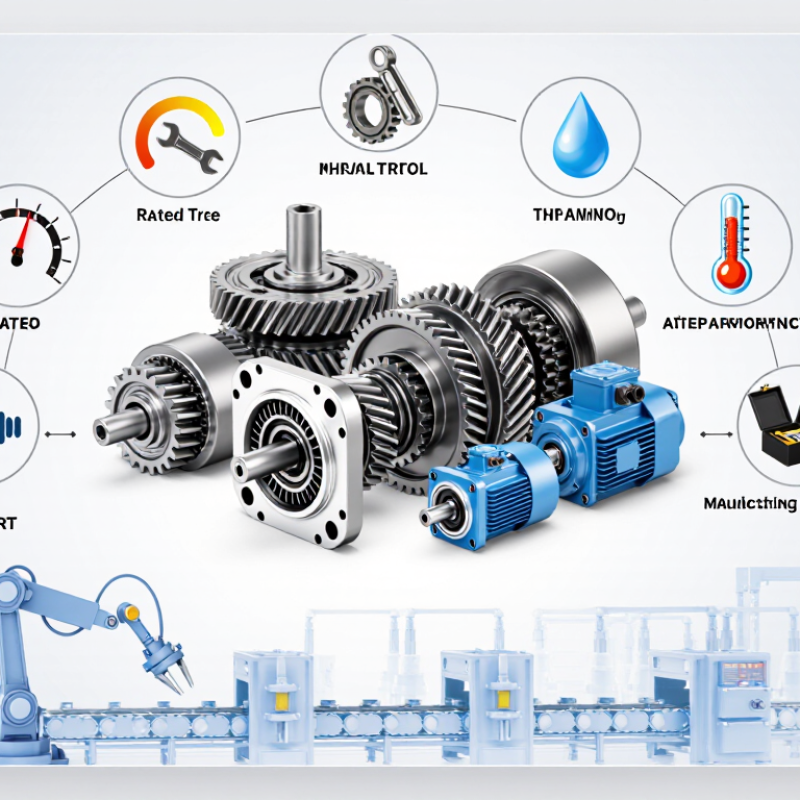
Precision gear motors combine an electric motor with a geared transmission. They deliver controlled speed, torque, and movement in compact equipment. Unlike standard motors, they emphasize repeatable positioning and low mechanical error. This matters in robotic joints, inspection systems, medical devices, and automated production lines.
A precision gear motor can reduce motor speed while increasing usable torque. Its gearbox also helps maintain stable motion under changing loads. Engineers often examine backlash, gear ratio, efficiency, noise, thermal behavior, and service life. In practical testing, a motor may perform well at room temperature but drift after hours of operation. That detail is easy to overlook. Real equipment rarely runs under perfect conditions.
Tips: Match the motor to the actual load, not the advertised peak rating. Check continuous torque, starting torque, shaft direction, and duty cycle. Ask suppliers for test data, dimensional drawings, and tolerance information. Sample testing is valuable, especially when movement must remain accurate near the end of a work shift. A quieter gearbox is not always a more precise gearbox. Sometimes, I think selection teams focus too much on specifications and too little on maintenance access. A reliable supplier should explain these trade-offs clearly and support verification before volume production.
Top Precision Gear Motor Suppliers Worldwide?
Comparing global precision gear motor suppliers requires more than reading torque figures. Check rated torque, peak torque, speed range, and gearbox backlash together. A motor may deliver excellent torque but lose accuracy under repeated load. Ask for test data at your actual voltage, temperature, and duty cycle. Real conditions expose weaknesses.
Efficiency matters during long operating cycles. Measure heat around the housing after several hours, not after a brief laboratory test. Review noise, vibration, bearing life, and output-shaft runout. The supplier should provide clear tolerances and inspection records. Helpful documentation includes dimensional drawings, performance curves, material details, and serial-level traceability.
Look for dependable quality systems and relevant safety certifications. Certification alone is not proof of consistent performance. A capable supplier explains sampling methods, final testing, and corrective-action procedures. Evaluate enclosure protection, cable design, connector reliability, and resistance to dust or moisture. Lead time matters too, especially for replacement units. Technical support should answer specific engineering questions without vague promises. I have learned that published accuracy can hide application limits. Request a sample and test it with your real load, mounting position, and control profile. The result may challenge the datasheet. That is useful evidence.
This chart compares the minimum nominal efficiencies defined by IEC 60034-30-1 for IE2 and IE3, four-pole, 50 Hz induction motors across common power ratings. When evaluating global precision gear motor suppliers, use these values as a standardized motor-efficiency reference and separately verify gearbox efficiency, backlash, positioning accuracy, thermal performance, ingress protection, and quality-system certifications.
Reference: IEC 60034-30-1 efficiency classes for line-operated AC motors. Gear motor system efficiency may be lower because it also includes gearbox losses.
Precision gear motor suppliers are concentrated in several industrial regions, each with distinct strengths. East Asia offers broad production capacity, competitive pricing, and rapid customization. European suppliers often emphasize tight tolerances, quiet operation, and documented quality systems. North American companies commonly support automation projects with application engineering and responsive technical service. Southeast Asia is also expanding, especially for assembly, electronics integration, and regional distribution.
Supplier categories matter as much as geography. Integrated manufacturers produce the motor, gearbox, controls, and testing records under one system. Specialist precision gearbox suppliers focus on low backlash, high torque density, and long service life. Custom engineering firms adapt gear ratios, shaft dimensions, connectors, and mounting patterns for unusual machines. Distributors can shorten delivery times, but their technical depth varies. Contract assemblers may reduce costs, although final inspection standards require careful verification.
In practical evaluations, request measured backlash, efficiency curves, noise data, thermal limits, and life-test conditions. Ask whether those figures apply to your actual load cycle. A catalog number is not enough. Check sample reports, traceability, warranty terms, and spare-part access before approval. Suppliers with ISO-based processes may still differ greatly in inspection discipline. That detail is easy to miss. No region wins every project. A lower purchase price can become expensive when alignment problems, unstable temperatures, or delayed service appear in the field. Performance must be judged against the complete operating environment.
Choosing among top precision gear motor suppliers worldwide requires more than comparing catalog prices. A reliable evaluation begins with application fit. Check torque at the actual duty cycle, not only the advertised peak. Confirm backlash, radial load, noise, thermal limits, and expected service life. Request test records for efficiency and positioning accuracy. Small errors become expensive when a motor runs thousands of cycles daily.
Market data shows why this discipline matters. The International Federation of Robotics reported 541,302 industrial robots installed globally in 2023. That demand increases pressure on gear motor suppliers to deliver repeatable motion. Ask whether the manufacturer follows recognized motor and quality standards, such as IEC 60034 and ISO 9001. Certification helps, but it does not replace product-level evidence. Review inspection methods, calibration intervals, failure statistics, and traceability for critical components.
Supplier audits should include sample testing under heat, vibration, and repeated starts. Short answers deserve caution. Can the supplier provide measured backlash across production batches? Can engineering teams explain lubrication choices and overload behavior? Lead time also needs verification through historical delivery records, not promises. A 2024 MarketsandMarkets analysis identifies automation growth as a major driver of the gear motor market, yet market expansion can hide uneven manufacturing quality. I would not select a supplier from specifications alone. One overlooked tolerance may change the whole machine. Suppliers should also admit where their data is limited; that honesty is useful evidence.
When comparing precision gear motor suppliers worldwide, start with the machine, not the catalog. Define output torque, speed range, positioning accuracy, and allowable backlash. A conveyor may need steady torque. A robotic axis may need repeatable stopping. Write the load profile over a full cycle. Include starts, pauses, reversals, and peak loads. Small details matter.
Check whether the supplier provides sizing calculations, test data, and clear tolerance figures. Ask how the motor performs under heat, dust, vibration, and frequent starts. For food-processing equipment, consider washdown protection and suitable surface materials.
For warehouse systems, inspect duty ratings, noise levels, and brake response. For medical or laboratory equipment, prioritize smooth motion and documented consistency. Ask for evidence. Marketing claims alone are weak.
Electrical compatibility also deserves careful review. Confirm voltage, current, controller feedback, connector type, and thermal limits. A compact motor may fit physically but still overheat during continuous operation.
Service support can affect production more than the purchase price. Check spare-part availability, repair procedures, technical response time, and delivery stability. I have seen projects focus on peak torque while ignoring low-speed control. That mistake can create jerky motion and premature wear.
Measure twice. No checklist is perfect, so test a representative motor under real operating conditions before approving a large order.
Start with your machine’s actual load cycle. Check torque, speed, backlash, noise, heat, and service life. Catalog numbers are not enough. Request measured test data and sample inspection reports.
East Asia often provides broad capacity and fast customization. European suppliers commonly emphasize quiet operation and tight tolerances. North American suppliers may offer strong application support. Southeast Asia is expanding in assembly and electronics integration. No region wins every project.
Ask for efficiency curves, backlash measurements, noise data, and thermal limits. Confirm the test conditions behind every figure. Check traceability, warranty terms, spare parts, and delivery records. Short answers deserve caution.
Test a representative motor with real loads and repeated starts. Include pauses, reversals, heat, vibration, and peak torque. A motor may pass a short test but overheat during continuous operation. Real conditions matter.
Focus on repeatable stopping, low backlash, and smooth low-speed control. Check positioning accuracy across repeated production batches. Ask how the motor handles sudden reversals and overloads. Small errors become expensive after thousands of cycles.
Review inspection methods, calibration intervals, and failure records. Ask whether critical components have clear traceability. Quality certificates can help, but they do not replace product evidence. I would not rely on certification alone.
Verify voltage, current, controller feedback, connector type, and thermal limits. A compact motor may fit physically but still overheat. Confirm compatibility with the complete control system. One overlooked connection can delay commissioning.
Check spare-part access, repair procedures, technical response times, and delivery stability. A lower purchase price may create higher field costs. Alignment problems and delayed service can stop production. This part is easy to underestimate.
A Precision Gear Motor is an integrated drive system designed to deliver controlled speed, stable torque, accurate positioning, and efficient power transmission in demanding equipment. This article explains the motor’s structure, operating role, and importance in applications where repeatability, low backlash, quiet operation, compact design, and long service life are essential. It also introduces key performance standards for comparing suppliers, including torque capacity, speed range, reduction ratio, positional accuracy, efficiency, thermal performance, vibration control, and quality consistency.
The discussion reviews major global manufacturing regions and common supplier categories, from specialized engineering manufacturers to application-focused system providers. It outlines practical methods for evaluating manufacturers, such as examining technical documentation, testing capability, customization support, production reliability, certifications, warranty terms, and after-sales service. Finally, it explains how selection criteria should vary across robotics, automation, medical equipment, packaging machinery, aerospace systems, and other industrial applications, helping buyers match motor specifications with operational demands, environmental conditions, installation limits, and total lifecycle costs.
