What Are Geared Motor Solutions and How Do They Work?

Time:2026-09-17 Author:Oliver
0%

Geared Motor Solutions convert electrical energy into controlled mechanical motion. They combine an electric motor with a gearbox, reducing speed while increasing usable torque. Picture a conveyor moving heavy cartons steadily, rather than jerking forward under sudden load.

The U.S. Department of Energy reports that motor-driven equipment can consume more than half of industrial electricity. That figure explains why efficiency, correct sizing, and maintenance matter. The International Energy Agency also identifies efficient motor systems as an important pathway for reducing industrial energy demand. However, reports often discuss motors broadly. They do not always reflect the heat, dust, vibration, or installation errors found on real factory floors.

ABB Motion President Sami Atiya has described the direction of modern motion technology this way: “The future of motion is electric, digital and sustainable.” His statement aligns with the development of smarter Geared Motor Solutions, including integrated sensors, variable-speed drives, condition monitoring, and improved energy control. These features can reveal abnormal vibration before a gearbox fails, although sensors cannot compensate for poor engineering.

This article explains how geared motors transfer torque, how gear ratios influence speed, and why application data must guide selection. It will examine efficiency classes, lubrication, thermal limits, maintenance schedules, and control options. Sources include the U.S. Department of Energy’s motor-system guidance, International Energy Agency efficiency analysis, and ABB’s industrial motion publications. The evidence is useful, but not perfect. Every installation still deserves measurement, testing, and honest review.
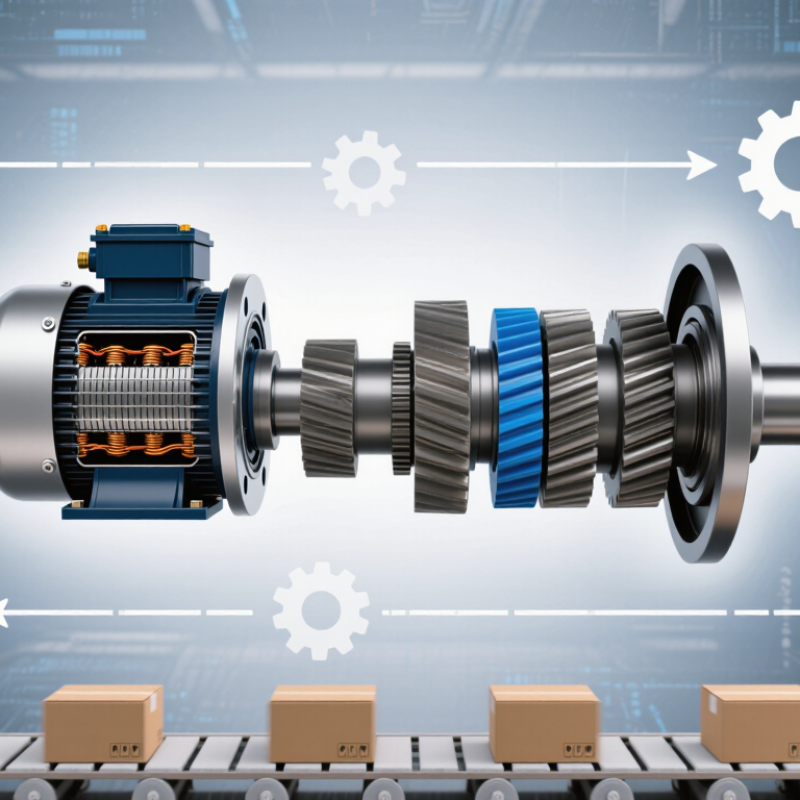
What Are Geared Motor Solutions and How Do They Work?

What Is a Geared Motor and What Are Its Main Components?

A geared motor combines an electric motor with a gearbox in one compact unit. The motor creates rotational energy, while the gearbox changes its speed and torque. This arrangement helps equipment move heavy loads with controlled, repeatable motion.

The main components include the motor, gear train, input shaft, output shaft, bearings, housing, seals, and lubricant. The gear train may use spur, helical, planetary, or worm gears. Each type affects noise, efficiency, load capacity, and direction of movement. Inside the housing, the motor spins the input shaft. The gears then transfer motion through several stages. The output shaft turns more slowly, but it delivers greater torque.

Small details matter. A sealed bearing can reduce friction and protect internal parts from dust. Proper lubrication limits heat and gear wear. A rigid housing keeps the shafts aligned during operation. I have seen motors perform poorly because their mounting surfaces were uneven, not because the motor lacked power. That issue is easy to overlook.

A geared motor is not automatically efficient. Gear contact creates friction, and poor alignment can increase vibration. Designers should match the reduction ratio with the required load, operating time, and starting force. A higher ratio may provide more torque, but it can also reduce output speed too much. In practice, temperature checks and unusual noise often reveal problems before visible damage appears. Even careful calculations need real operating feedback.

How Does a Geared Motor Convert Speed and Torque?

A geared motor combines an electric motor with a gearbox to trade speed for usable torque. The motor produces rotation quickly, often at 1,800 revolutions per minute. The gearbox slows that rotation through fixed gear ratios. In return, torque increases.

The calculation is straightforward. A 20:1 gearbox changes 1,800 rpm to about 90 rpm. If the motor supplies 1 newton-metre of torque, a 90% efficient gearbox may deliver approximately 18 newton-metres. The formula is output torque = motor torque × gear ratio × efficiency. Real equipment is less perfect. Friction, heat, lubrication, and uneven loading reduce performance. The International Energy Agency reports that electric motor systems consume roughly half of global electricity. The U.S. Department of Energy also identifies motor-driven systems as major industrial electricity users. These figures make gearbox selection an energy decision, not merely a mechanical one.

Tips: Match the gearbox to the actual load, not the advertised peak load. Check starting torque, duty cycle, backlash, noise, and thermal limits. Keep the shaft aligned. Poor alignment can waste torque and shorten bearing life. A larger ratio is not always better; excessive reduction may create slow movement, heat, and unnecessary cost. In field testing, measure current, temperature, and output speed under real conditions. The datasheet is useful, but it cannot predict every workshop problem.

What Types of Geared Motors Are Available?

Geared motors combine an electric motor with a gearbox to control speed and torque. The gearbox reduces rotational speed and increases usable turning force. This makes the system practical for conveyors, gates, mixers, and automated equipment. Their design varies considerably. Load behavior, operating time, space, and maintenance needs all affect the correct choice.

Spur geared motors use straight teeth and offer a simple, economical structure. They suit moderate loads but can produce noticeable noise.

Helical geared motors run more quietly and carry heavier loads, although their angled teeth create additional axial force.

Planetary geared motors provide high torque in a compact housing. They are useful for robotics and precision drives.

Worm geared motors deliver strong reduction and may resist reverse movement. However, they can lose more energy through friction.

Bevel geared motors transfer power through a right-angle layout, helping equipment fit into restricted spaces.

Selection should reflect real operating conditions, not only catalogue ratings. For fast conveyor lines, helical units often provide smoother operation. For lifting mechanisms, worm or planetary designs may offer better control. Engineers should check starting torque, shock loads, heat, noise, and expected service life. A quieter gearbox can still fail if its thermal limits are ignored. There is no universally best type. That sounds obvious, yet rushed specifications often miss it. Small installation tests can reveal vibration, heat buildup, or unexpected backlash before full deployment.

How Are Geared Motor Solutions Selected for Different Applications?

How Are Geared Motor Solutions Selected for Different Applications?

Selecting a geared motor starts with the machine’s real operating demands, not its catalogue speed. Engineers calculate required torque, output speed, duty cycle, and starting load. A conveyor carrying uneven boxes may need high breakaway torque and controlled acceleration. A packaging axis may need low backlash and frequent reversing. The U.S. Department of Energy reports that motor-driven systems consume more than half of industrial electricity, so incorrect sizing can increase both energy use and mechanical stress.

The gearbox ratio is chosen from the required input and output speeds. Engineers then check thermal capacity, service factor, shaft arrangement, mounting position, and brake requirements. Food-processing equipment may require sealed housings and washdown-resistant materials. Outdoor machinery needs protection against moisture, dust, and temperature changes. The International Energy Agency’s Energy Efficiency 2023 report estimates that electric motor systems use about 53% of global electricity, making efficiency a practical selection criterion.

A neat calculation is not enough. Real installations are messier. Shock loads, poor alignment, and short cycling can defeat an apparently suitable unit. Engineers should compare measured load data with design assumptions, then allow controlled margin without oversizing. Oversizing can reduce efficiency and raise purchase costs. The final choice should also consider maintenance access, expected lifetime, noise, and replacement compatibility. That last detail is often overlooked.

What Factors Affect Geared Motor Performance and Service Life?

Geared motor solutions combine an electric motor with a gearbox. The gearbox reduces speed and increases torque for conveyors, mixers, lifts, and packaging equipment. Performance depends heavily on the operating environment. The U.S. Department of Energy reports that motor-driven systems use about 70% of industrial electricity. Small efficiency losses can therefore create significant costs.

Load variation is a major factor. A motor running above its rated torque may overheat, while frequent starts increase thermal stress. Poor alignment can raise vibration and damage bearings, seals, and gears. Lubricant quality matters too. Excessive heat, dust, moisture, or the wrong oil can shorten gear life. IEC 60034-30-1 defines motor efficiency classes, but efficiency ratings alone cannot predict field performance. Installation and control settings remain important.

Tips: Check vibration, temperature, current, and oil condition during scheduled inspections. Keep records. Compare readings with the original baseline, not only with general limits. The ISO 20816 vibration standard offers useful guidance for rotating machines. In practice, service life also depends on duty cycle and maintenance discipline. A gearbox used intermittently may last longer than one operating continuously at a lower load. That sounds obvious, but it is often missed. Perfect maintenance planning is unrealistic; unexpected contamination and operator habits still matter. A practical inspection routine, correct load sizing, and early bearing replacement usually protect performance better than reactive repairs.

What Are Geared Motor Solutions and How Do They Work?

Geared motors combine an electric motor with a gearbox to reduce speed and increase output torque. The chart shows representative mechanical-efficiency ranges for common geared motor architectures.

Geared motor performance and service life are affected by applied load, operating temperature, lubrication quality and interval, alignment, contamination, shock loading, duty cycle, and installation conditions. Actual efficiency depends on the specific design, ratio, speed, load, and maintenance practices.

FAQS

What is a geared motor?

A geared motor combines an electric motor with a gearbox. The gearbox lowers speed and increases usable torque. It suits conveyors, gates, mixers, and automated machines.

What are the main types of geared motors?

Spur units are simple and economical, but they can be noisy. Helical units run more quietly and handle heavier loads. Planetary units provide high torque in compact housings. Worm units offer strong reduction and may resist reverse movement. Bevel units transfer power through a right-angle layout.

Which geared motor is suitable for a fast conveyor?

A helical geared motor often provides smoother operation for fast conveyors. Check the starting torque and acceleration requirements. Uneven boxes may create sudden loads. Test it.

Which geared motor works well for lifting equipment?

Worm or planetary designs may provide useful control for lifting mechanisms. Worm units can resist reverse movement, but friction may reduce efficiency. Confirm braking and holding requirements before selection.

How should engineers select a geared motor?

Start with actual torque, output speed, duty cycle, and starting load. Then check ratio, thermal capacity, mounting position, shaft arrangement, and brake needs. Catalogue speed alone can mislead.

What environmental conditions affect geared motor selection?

Dust, moisture, heat, and temperature changes can shorten service life. Outdoor equipment may need sealed protection. Washdown areas may require resistant housings and suitable materials. Details matter.

What causes geared motor failure?

Excessive torque can overheat the motor. Frequent starts create thermal stress. Poor alignment increases vibration and damages bearings, seals, and gears. Wrong lubricant can also accelerate wear. Small errors accumulate.

How can geared motor service life be improved?

Inspect vibration, temperature, current, and lubricant condition regularly. Compare readings with the original baseline. Keep maintenance records. Replace damaged bearings early. Perfect planning is unrealistic, so inspect after unusual noise or contamination.

Why should geared motors be tested before full installation?

Small installation tests can reveal vibration, heat buildup, backlash, and alignment problems. They also expose incorrect load assumptions. A quiet gearbox may still exceed its thermal limits. Do not trust calculations alone.

Conclusion

Geared Motor Solutions combine an electric motor with a mechanical gearbox to deliver controlled motion for equipment and machinery. The motor supplies rotational energy, while gears adjust speed, torque, and direction according to the application’s needs. Key components typically include the motor, gear train, housing, bearings, seals, shaft, and connection elements. By reducing motor speed through different gear ratios, a geared motor can produce higher output torque and support steady, reliable movement.

Available types include helical, spur, bevel, worm, planetary, and other specialized designs, each suited to different load, space, efficiency, and noise requirements. Selecting the right solution involves evaluating operating speed, required torque, duty cycle, installation position, load characteristics, environmental conditions, and available power. Performance and service life also depend on proper sizing, lubrication, alignment, cooling, sealing, material quality, maintenance, and protection from overloads or excessive heat. A carefully matched geared motor can improve efficiency, reduce downtime, and provide dependable long-term operation.

Oliver

Oliver

Oliver is a seasoned marketing professional with a wealth of expertise in driving brand awareness and engagement. With a deep understanding of our company's product offerings, he consistently delivers high-quality content that enriches our professional blog. His insights not only shed light on......